



One high-spend month doesn’t define your financial journey—it’s never too late to regroup.
Small changes in your habits can lead to big wins for your wallet.
If credit card debt is weighing you down, a Debt Management ProgramDebt Management Program from GreenPath can help you take control and move forward.
Why You Overspent This Month: Summer Spending Sneaks Up on Us
Sunshine, longer days, and social events can lead to higher spending before we even realize it. Whether it’s travel, weddings, dining out, or keeping the kids entertained, summer can be a big budget killer.
If your credit card balance crept up or your budget feels off track, you’re not alone. The good news? You can bounce back. By reviewing summer spending and spotting the habits that snuck in—like last-minute getaways or extra takeout—you’ll be better prepared to avoid overspending and feel more in control heading into fall.
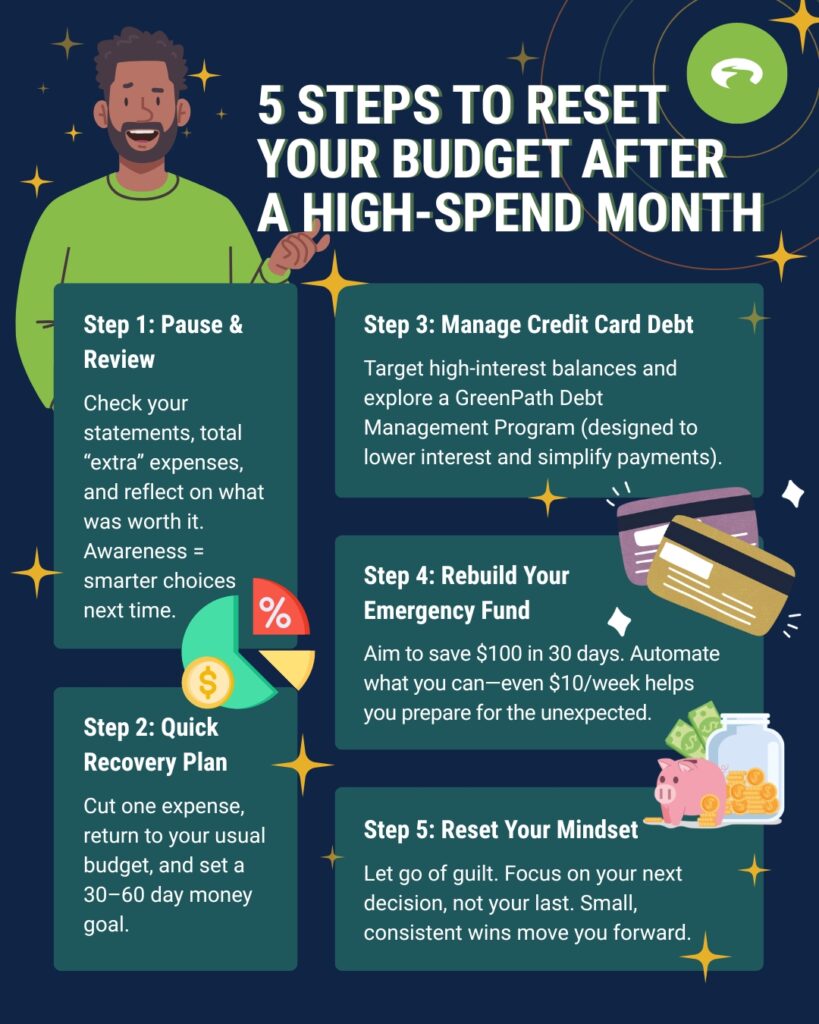
Step 1: Review Summer Spending Without the Guilt
Before diving into your recent transactions, take a moment to pause. Overspending during summer is common, and this isn’t about shame. It’s about getting a clear picture of your spending so you can move forward with confidence.
Highlight expenses that fall outside your regular monthly budget—vacations, dining out, kids’ activities, impulse purchases, etc. These are often the hidden drivers behind summer overspending.
As you track expenses, ask yourself:
- Was this purchase worth the cost?
Understanding what brought value (and what didn’t) helps shape future spending decisions. - Were there any surprises?
Look out for unexpected charges, forgotten subscriptions, or fees that snuck in. - Where can I cut back next time?
Identifying patterns now can help prevent credit card debt from growing next season.
Tracking your spending is a key step in managing your budget and avoiding high-interest credit card balances. And remember—being honest with yourself isn’t the same as being hard on yourself. This kind of review builds financial awareness and sets the stage for smarter budgeting and better money habits year-round.
Step 2: Create a Quick-Start Recovery Plan
You don’t need to overhaul your life to see progress. Focus on three key budget categories:
- Cut just one or two expenses—for now
Can you pause one streaming service? Skip one takeout night per week? Even cutting just one expense can help you save money. Choose one small shift that feels doable. You’re not cutting forever—just creating breathing room. Making these small changes can also help you build better spending habits over time. - Shift back to your “default” budget
Get grounded by going back to your baseline. What’s your typical monthly spending in key areas like groceries, gas, and bills? Review each category to see where your money goes. Use an app or a budget worksheetbudget worksheet to organize expenses into categories and get a clear picture. Reviewing each line in your budget can help you identify which categories need adjustment. - Set a short-term goal
Pick a target for the next 30-60 days that aligns with your financial goals. Maybe it’s paying off $300 in credit card debt, saving $100, or cooking 15 meals at home. Decide on a specific target to help you stay motivated. A short-term win builds confidence and motivation.
Pro Tip
The classic 50/30/20 rule can be a helpful starting point—spend 50% on needs, 30% on wants, and 20% on savings or debt. But in today’s economy, those numbers might feel tight. Focus on progress, not perfection—even a small shift toward saving or paying down debt is a win.
Step 3: Be Strategic With Credit Card Balances
Credit card debt can add up fast—especially after a high-spending month. With interest rates at historic highs, it’s more important than ever to have a plan for paying down balances.
Prioritize high-interest balances
Start by allocating as many dollars as possible to pay toward the card with the highest interest rate, while making minimum payments on your other balances. Making these payments consistently is crucial to reduce your debt and avoid negative consequences. This “avalanche” method saves the most money over time.
Consider a balance transfer—carefully
Some credit cards offer 0% interest on balance transfers for 12-18 months. This can buy you time but be mindful of fees and eligibility. Keep in mind that a balance transfer can impact your budget for the current month, so plan accordingly. Any changes in your financial overview during this process are expected and are a normal part of managing your finances.
Explore a Debt Management Program
If you’re juggling multiple credit cards and high interest is slowing your progress, GreenPath’s Debt Management ProgramDebt Management Program could be a smart solution. This structured plan is designed to consolidate your payments, lower interest rates, and help you pay off debt faster—without taking out a new loan. It also helps you manage your income more intentionally, so every dollar goes further toward your financial goals.
Step 4: Rebuild Your Emergency Fund (Yes, Even $100 Helps)
If summer spending led you to dip into your savings—or deplete them entirely—you’re in good company. Many people rely on emergency funds to get through travel costs, child care, home repairs, or unexpected expenses. The key is not to feel guilty—it’s to rebuild, gradually and intentionally.
Start with a micro-goal—aim to save $100 in the next 30 days. That breaks down to just over $3 a day or $25 a week. Once you hit that goal, set another one. Small milestones help you stay motivated and avoid turning to credit cards for surprise expenses.
Automate your savings if you can, setting up a recurring transfer from your checking to savings account on payday. This “set-it-and-forget-it” approach helps build your emergency cushion without having to think about it.
Pro Tip
Label your savings account “emergency fund” in your banking app—it’s a small psychological trick that helps reduce the temptation to spend it.
Step 5: Reset Your Mindset
When you’ve overspent—or feel like you’re “behind” on your finances—it’s easy to spiral into guilt, shame, or frustration. But managing your money isn’t just about budgeting spreadsheets or debt payoff calculators. It’s about mindset.
That’s why it’s so important to reset—not just your budget, but your inner dialogue.
Start by reminding yourself: one expensive month doesn’t define your future. It’s just one chapter in your financial story. You’ve already taken the first step by noticing it and deciding to course-correct.
You don’t need to overhaul your life to see progress. Focus on three key budget categories:
- “I made the best choices I could at the time.”
- “I’m not behind—I’m just getting back on track.”
- “My next decision is more important than my last.”
Celebrate small wins—like making a budget-friendly meal, skipping a purchase, or setting aside $10 in savings. These small actions build confidence and momentum.
Resetting your mindset doesn’t mean pretending everything is fine. It means acknowledging where you are, accepting it with kindness, and moving forward with purpose.
Need Extra Support? You’ve Got This—and We’ve Got You
GreenPath’s NFCC- and HUD- certified financial counselors are just a call away. Whether you want help reviewing your budget, managing debt, or creating a realistic plan to move forward, we’re here to listen and guide you—judgment-free. Our counselors can also provide practical tips tailored to your situation.
Don’t wait for the next season to “finally” start fresh. You deserve peace of mind now.
You Might Also Be Interested In…
GreenPath Financial Service
GreenPath, A Financial Resource
If you’re interested in building healthy financial habits, paying down debt, or saving for what matters most, take a look at these free financial tools.